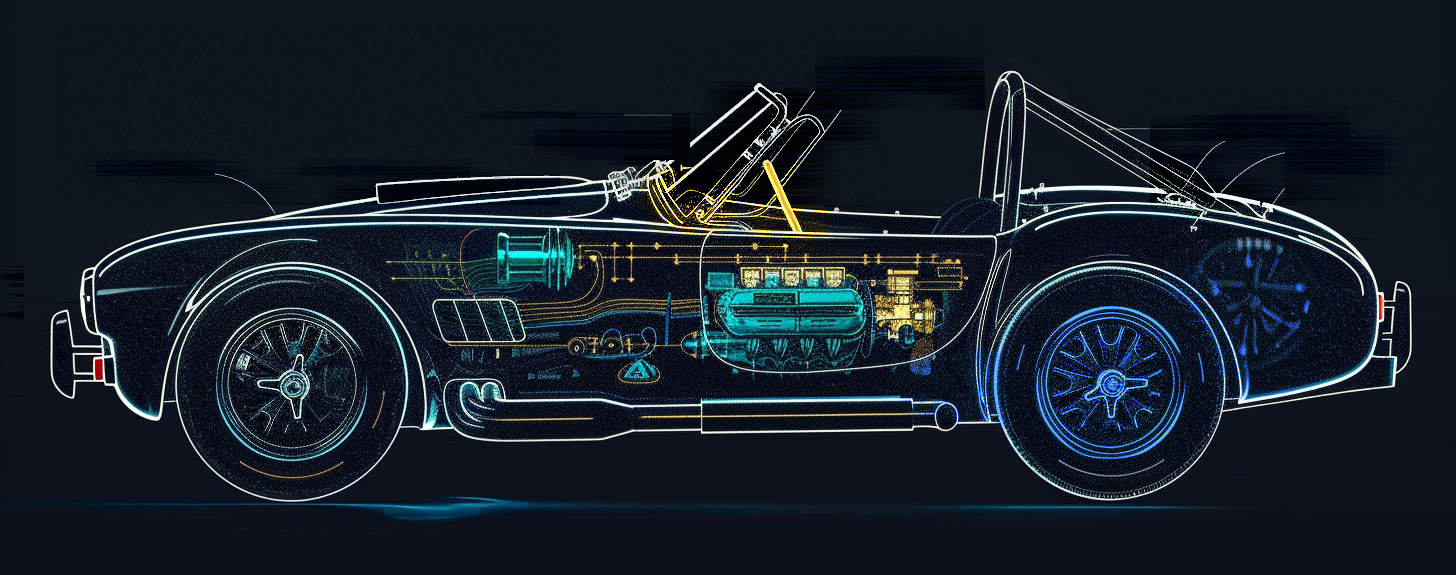
H · Human — the steering
O · Organization — the drivetrain
T · Technology — the engine
Every organization racing to adopt AI is really building one capability across three dimensions at once — the people who hold the judgment, the structure that grants the authority, the platform that enforces it. Most move one and call it done. HOT is the discipline of building all three together, in the order the value actually sits.
The value sits in the two dimensions the budget starves. That is not a failure of the models — it is a failure of allocation. HOT exists to correct it, and to hold each dimension to the same standard.
An AI agent is a capable-but-untrusted actor placed at a seam — allowed to propose far more than it should be allowed to permit. The junior employee and the agent are the same design problem: capability arrives before trust, and the institution has to close that gap without throwing away the capability.
Closing it is not one job. It takes a person who can judge what good looks like, an organization whose authority is explicit enough to draw the line, and a platform that can actually enforce the line at machine speed. Miss any one of the three and the capability leaks — either into risk you can't see, or into value you never capture.
HOT names the three and insists they move together. It is not a maturity ladder you climb one rung at a time. It is a single capability with three load-bearing systems.
The three dimensions are not phases and not departments. They are systems in one machine: the engine makes the power, the drivetrain turns power into motion, the steering decides where it goes. Take any one away and the other two cannot do their job — a pilot that impresses and changes nothing is almost always a machine with two of the three built.
HOT is the discipline of building all three together. The human change is designed against the structure it will live in. The structure is designed against the platform that must carry it. The platform is designed around the people who will actually use it. Run them in sequence instead and each hands off to the next, losing tension at every seam.
Build all three under tension — or hand them off in pieces and hope they hold.
The seam is the line between what an agent proposes and what the organization permits. Every HOT decision is really a decision about that line — who has the judgment to move it, who has the authority to set it, and whether the platform can hold it. A real transformation is one where the override rate falls over time: the agent proposes, the humans correct less and less, and the permit widens because it earned the trust — not because someone got tired of saying no.
Read about the seam →HOT is the standard for building an organization an agent can actually work inside — one dimension at a time is how it fails.
Pegasus Collective is the practice that moves an organization across all three dimensions together — the people, the structure, and the platform — instead of one at a time.
A read across all three dimensions — your people, your structure, your platform — each scored separately, with its own result.
HOT is drawn from a body of essays on the agentic transition. The fullest articulation is Orientation — the framework named as the crossing, and why the three move in sequence.
Read Orientation →